Artificial Turf for Veterinary Clinics in South Florida
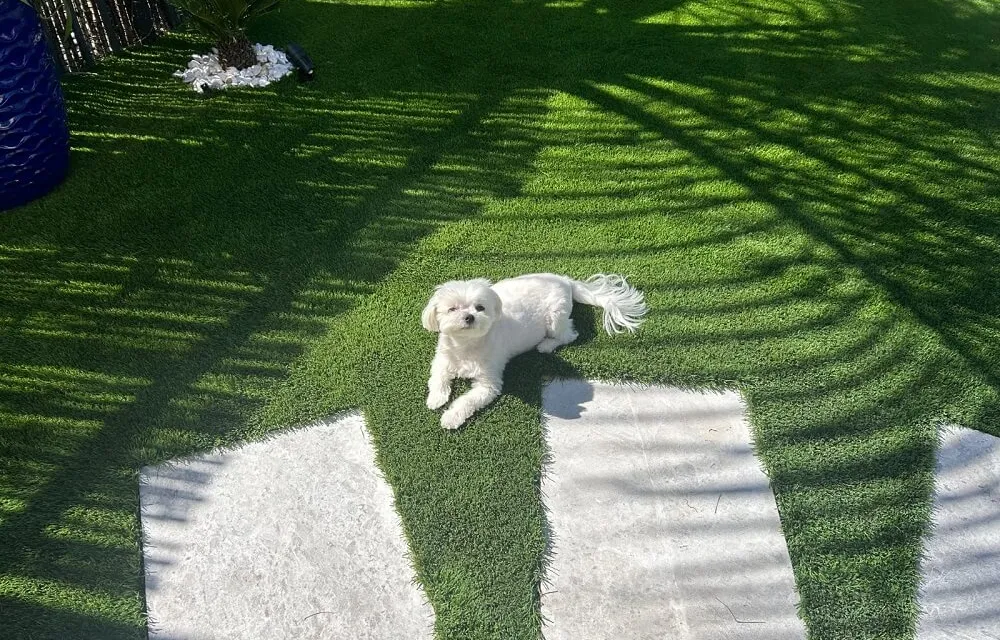
A veterinary clinic usually has two different grass problems on the same property, and they call for two different answers. There’s the parking lot frontage and entry walk that clients see on the way in, judged purely on how the practice presents itself, and there’s the relief yard or boarding run out back, where a dozen or more dogs a day do exactly what that space is built for. Artificial turf has started showing up at animal hospitals and clinics across South Florida’s affluent corridor to solve both halves of that problem, but treating a relief yard the same way as a decorative entry strip is the fastest way to end up disappointed with either one.
Frontage and lobby turf vs. a working relief yard
A client-facing entry or parking median only has to look clean and hold its color, so it uses roughly the same spec as any other commercial landscape job - dense fiber, a standard base, factory-cut edging around walkways and signage. A relief yard or boarding run is a different build entirely. It needs a faster-draining, more permeable base underneath so waste moves through to proper drainage instead of sitting on the surface, and it needs to tolerate daily rinsing without the fiber matting down or the seams lifting. Govorex treats these as two separate zones on the same site visit rather than quoting one blanket spec for the whole property.
What a high-use relief area actually needs underneath
The surface fiber matters less here than what’s underneath it. A relief yard needs a reinforced, highly permeable base - deeper and more porous than a standard landscape job - so that frequent waste and daily rinse-downs drain away instead of pooling against the backing. Skipping that step is the most common reason a clinic’s relief turf starts smelling or wearing unevenly within a year, while the same synthetic grass laid over the right base at a nearby property holds up for years without the complaint.
Sanitation: turf against the alternatives
Vet practices that haven’t converted are usually choosing between bare dirt, pea gravel, or mulch for a relief area, and each has a worse sanitation profile than a well-built turf system. Dirt turns to mud and tracks into exam rooms. Gravel traps waste and odor in the gaps between stones in a way that resists hosing. Mulch holds moisture and has to be pulled and replaced on a maintenance schedule once it starts breaking down. Synthetic turf with a properly drained base gives staff one consistent surface to rinse rather than a material that needs periodic replacement on its own.
Getting the project approved
Few veterinary practices own their building outright, so approval usually runs through a landlord, a shopping plaza’s property management company, or a multi-location practice group’s facilities team - rarely an HOA board, but almost always someone. Govorex builds the same kind of documentation for any of those reviewers: material spec, drainage plan, and a site map showing which zones get the standard commercial base and which get the reinforced relief-yard build. Practices near Wellington, where small-animal and equine veterinary care is part of the local economy, and Palm Beach Gardens have gone through this same approval step before work ever starts on-site.
What it costs and how it gets paid for
Commercial artificial turf starts at $6.99 per square foot installed, the same baseline rate used across any landscape-grade commercial job, with the total set by how the property splits between decorative frontage and reinforced relief-yard square footage. A clinic near Weston converting just its entry walk pays a different number than a multi-run boarding facility converting an entire back lot, which is why Govorex measures each zone separately at a free on-site consultation rather than quoting a flat per-property rate. Financing covers the project on Govorex’s usual terms - 50% down, the balance split into 12 equal monthly payments, no interest, subject to approval - and most installs, relief yards included, still finish inside the standard 48-hour window. A practice manager ready to see numbers can start with an instant quote, and clinics weighing a relief yard against a client-facing dog run may also want Govorex’s guide to turf for dog parks and HOA common areas for how the two compare.
Want your yard's real number? Outline it on a satellite map and see starting prices and a 12-month payment plan in about a minute — no sign-up.
Try the Instant Quote Calculator →