Artificial Turf Dog Parks for HOAs in South Florida
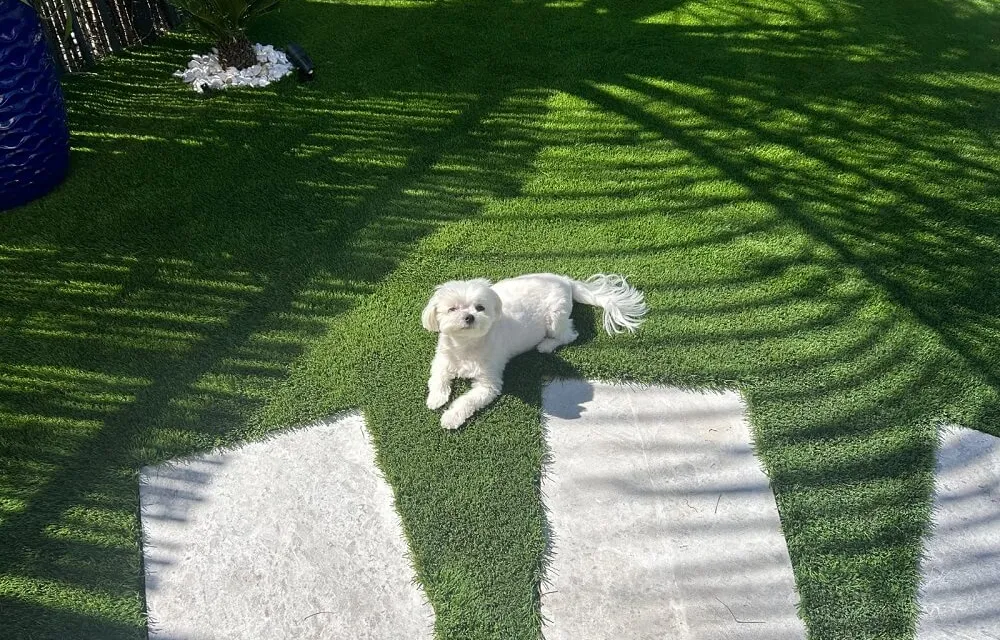
A shared dog park has become one of the more requested amenities in gated and HOA communities across Broward and Palm Beach County, and it raises a different set of questions than a homeowner’s backyard turf project does. It isn’t one family deciding what their yard needs - it’s a board weighing traffic from dozens of dogs against a common-area budget, an architectural review process, and a maintenance plan nobody wants to inherit later. Getting an artificial turf dog park right starts with answering those questions in the right order, before a lot gets fenced or a spec gets written.
Does the community actually need a dedicated dog park?
Not every HOA has the demand to justify one - the calculation usually starts with how many households in the community already walk dogs on shared paths or a strained patch of common-area sod that never recovers between mowings. Communities in Parkland and Weston that have made the jump typically had an underused corner lot or retention-area buffer that wasn’t earning its keep as landscaping anyway, which made the amenity closer to a repurposing project than new construction.
What makes dog-park turf different from a regular lawn?
Standard landscape turf is built for even foot traffic and appearance, but a shared dog park gets a different kind of use - concentrated paw traffic from animals that don’t share a household, cycling through all day without the recovery time a private backyard gets between visits. Pet turf solves for that with a denser fiber count and a base engineered for repeated wear, plus a permeable backing that lets waste and rinse water move through the surface instead of pooling on top of it. Specifying that correctly up front is what separates a dog park that still looks sharp in year three from one that mats down within a season.
How does the board get this approved without a fight?
An architectural review board evaluates a shared amenity differently than an individual homeowner’s yard swap - it wants to see drainage impact on neighboring lots, how the fencing reads from the street, and whether the project fits the community’s existing landscaping standards, not just a sample of the turf itself. Boards around Boca Raton and Palm Beach Gardens generally move faster when a proposal already answers those questions with a spec sheet and site plan, rather than leaving the board to ask for them after the fact. Govorex prepares that packet as a standard part of a community submission, the same way it does for a single homeowner’s HOA approval.
What does a community dog park actually cost?
Pet-grade artificial grass starts at $8.99 per square foot installed, the same rate a homeowner pays for a private dog yard, but a shared amenity’s total also depends on fencing, waste-station placement, and whatever drainage work the specific lot needs before turf goes down. That number gets set at a free on-site consultation once Govorex walks the lot with the board or property manager - there’s no flat per-amenity price that holds across every community, since a retention-area buffer and a flat open lot start from very different site conditions.
Who keeps it running once the ribbon-cutting is over?
This is usually the question that stalls a board the longest, and it has a simpler answer than most expect: synthetic turf doesn’t need mowing, fertilizing, or a watering schedule, so the ongoing task is limited to a periodic rinse and keeping waste stations stocked - work most communities already fold into an existing landscaping or common-area maintenance contract. A well-built base and permeable backing do most of the heavy lifting on their own, which is part of why more boards are treating a dog park amenity as a one-time capital project rather than an ongoing maintenance burden.
Getting a real plan for the lot
A shared dog park is worth a site visit rather than an instant quote estimate, since fencing, drainage, and lot shape drive the number more than raw square footage alone. Govorex’s pet turf systems cover everything from a single backyard run to a full HOA amenity, and the guide to HOA approval covers the paperwork side in more detail for boards weighing their first turf project. Every installation comes from a crew with 15+ years of experience, licensed and insured, serving Broward and Palm Beach County, with financing available at 50% down and 12 equal monthly payments, no interest, subject to approval.
Want your yard's real number? Outline it on a satellite map and see starting prices and a 12-month payment plan in about a minute — no sign-up.
Try the Instant Quote Calculator →