Artificial Turf and Invisible Pet Fences in FL
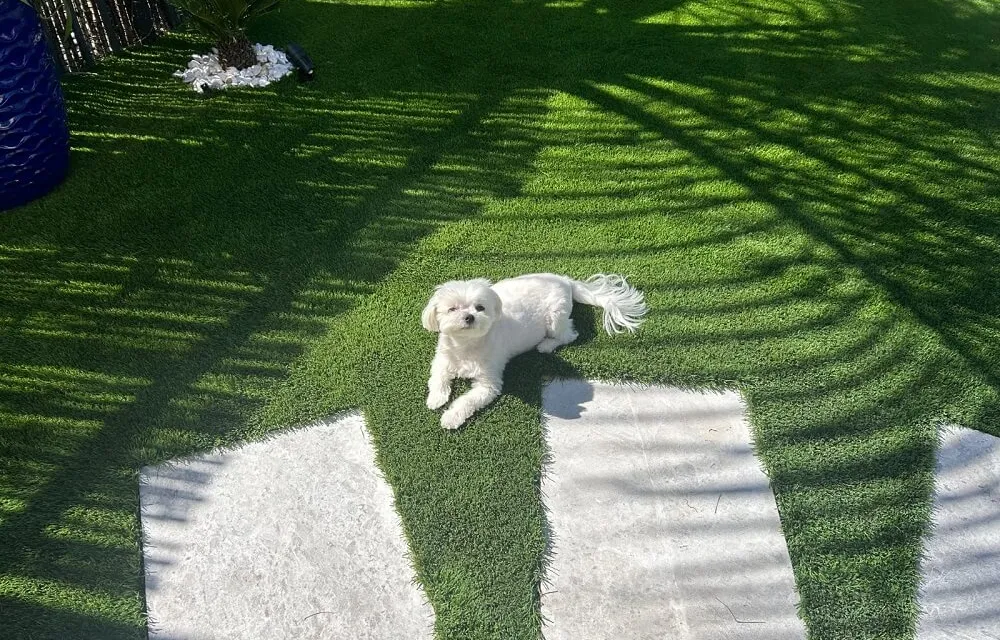
A homeowner’s artificial turf consultation in Parkland usually starts with the yard and ends with a question nobody asked about on the phone: “what happens to the dog’s fence?” Underground pet fencing is common across the newer developments in Broward and Palm Beach County, and it sits exactly where a turf installation needs to dig — a few inches down, looping the yard’s perimeter. The good news is that artificial turf and an existing invisible fence aren’t in conflict. The wire doesn’t care what’s on top of it, and a turf system doesn’t care what’s underneath it, as long as both get handled in the right order.
Here’s how the three common paths compare before a crew ever breaks ground:
| Approach | What happens to the wire | Best fit |
|---|---|---|
| Leave it buried | Mapped and worked around during excavation; signal is unaffected once turf is back down | Wire installed recently, at a safe depth, in good condition |
| Re-run it during install | Old wire removed, fresh wire laid in the open base before the turf goes on | Older wire, shallow runs, or a yard layout that’s changing |
| Switch to GPS/wireless | Wire removed or abandoned; collar system replaces it entirely | Households open to a smaller or differently shaped boundary |
Leaving the wire buried is the default when it’s in decent shape. Most invisible fence installers bury their loop two to six inches down, which is shallower than the base a turf system is built on. A quick signal trace before digging locates the exact path, the crew works around it rather than through it, and the loop ends up sitting undisturbed beneath the new base and synthetic grass — still sending the same signal to the same collar. This is the path that comes up most often in established neighborhoods around Coral Springs, where a lot of invisible fences have been in the ground for years without issue.
Re-running the wire makes more sense when the old loop is a question mark. Wire that’s brittle, chewed through near a gate, or laid shallower than it should have been doesn’t need to be a separate repair call — it gets replaced in the same open trench the turf base requires anyway, at the same time, instead of as its own project later. Homeowners doing a full-yard conversion in Weston often fold this in without adding much to the install timeline, since the ground is already open for the base work.
A GPS or wireless system is worth a conversation, not a default. Wireless transmitters project a roughly circular boundary from one base unit rather than tracing the yard’s actual property lines, so a long, narrow, or oddly shaped lot may not get full coverage the way a buried loop does. For a straightforward rectangular yard, though, it removes the wire question entirely — nothing buried, nothing to map, nothing for a future landscaping project to work around again.
None of this changes what the turf itself needs to do. Pet turf still needs permeable backing so it drains instead of holding odor, and that system starts at $8.99 per square foot installed — regular landscape turf starts at $6.99. Either way, financing is available as 50% down with the balance split across 12 equal monthly payments at no interest, subject to approval, so the fence conversation doesn’t have to compete with the budget for the lawn itself.
The only real mistake is skipping the signal trace and hoping the old wire is wherever the invisible fence installer originally said it was. Years of irrigation work, replanted beds, or a prior landscaping project can shift what’s actually in the ground versus what’s on the original diagram. A five-minute check before excavation avoids a cut wire and a second service call. If there’s a buried pet fence anywhere in the yard, mention it when booking — it gets mapped as part of the same free consultation that scopes the rest of the project. Run the yard’s dimensions through the instant quote tool to get a starting number first.
Want your yard's real number? Outline it on a satellite map and see starting prices and a 12-month payment plan in about a minute — no sign-up.
Try the Instant Quote Calculator →