Artificial Turf for Backyard Chicken Coops in South Florida
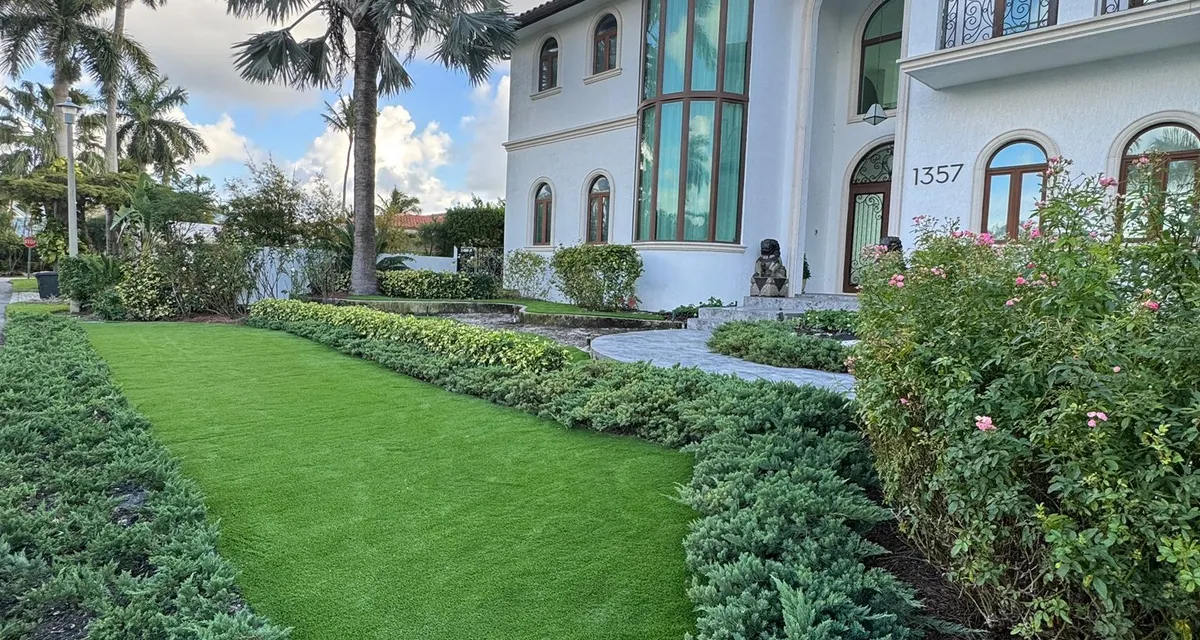
A small backyard flock has become a familiar sight on the bigger lots across Govorex’s service area - horse-zoned acreage in Southwest Ranches, half-acre parcels in Davie, and the larger yards that still back up to canals in Parkland. Most of those builds start with a coop and a fenced run, and most of those runs end up with the same problem: bare dirt turns to mud every time it rains, and wood shavings or mulch need constant replacing. Artificial turf solves that ground-cover problem the same way it does for a dog run, though a coop’s constant scratching, waste, and dust-bathing habits call for a few specific adjustments.
| Zone | What it needs to handle | Turf spec that fits |
|---|---|---|
| Run floor | Daily scratching, pecking, waste | Pet-grade turf, tight weave, fast-draining backing |
| Coop perimeter | Digging attempts from predators, edge security | Anchored, buried perimeter edging |
| Dust-bath corner | Chickens’ instinct to dig into dry soil | Small sand or soil box, left outside the turf |
| Approach path to coop | Daily foot traffic for feeding and egg collection | Standard landscape turf, denser pile |
What goes in each zone of a coop setup
The run floor is where the heaviest wear happens, which is why Govorex generally specs it the same way as a dog run: a tight weave that resists fraying under constant scratching, paired with a backing built to drain liquid waste rather than let it pool. The path between the house and the coop sees daily human traffic for feeding and egg collection, and can usually run on a standard landscape turf spec since it isn’t absorbing the same abuse as the run itself. Keeping those zones separate in the plan, rather than treating the whole area as one lawn, is what keeps the higher-wear spot from wearing out the rest of the budget.
Keeping the run sanitary without losing the yard to mud
Bare dirt under a coop turns into standing mud within the first good Broward or Palm Beach County downpour, and it stays damp long enough to hold onto odor between rinses. A properly built base underneath artificial grass - permeable, graded so water keeps moving instead of collecting against the coop’s base - lets a run get hosed down on a schedule without creating the muddy, smell-trapping mess that dirt or straw eventually becomes. It’s the same drainage logic Govorex applies to any pet-heavy yard, just concentrated into a smaller footprint.
Durability against scratching, digging, and dust bathing
Chickens scratch and peck at the ground instinctively, and a loose or low-density turf pile will show that wear faster than a tighter one built for pet use. The bigger risk is usually the dust bath instinct - birds want to dig into loose, dry material, and synthetic turf can’t offer that the way soil can. Builds that work best set aside a small sand or soil box inside the run specifically for dust bathing, which keeps that digging contained to one spot instead of aimed at the turf’s edges or seams.
HOA and local code considerations for coop structures
Chicken-keeping rules vary by city and by HOA in a way turf choice doesn’t change - some communities near Parkland and Southwest Ranches permit a small flock on larger lots, while others restrict coops by setback, flock size, or zoning entirely, so that approval is worth confirming locally before the ground cover is even part of the conversation. Once a coop is cleared, the turf around it gets reviewed the way any synthetic lawn material would be - visibility, density, and how it reads against the rest of the property - and Govorex brings the same spec sheet and sample it uses for dog runs on HOA land to that discussion.
Cost and how it’s paid for
Pet turf is the spec Govorex typically recommends for a chicken run given its drainage and wear demands, starting at $8.99 per square foot installed, while the walking path to the coop can often use standard residential artificial grass starting at $6.99. Because most runs cover a modest area rather than a full yard, total project cost tends to stay on the smaller side - the real number depends on the run’s footprint and what the existing ground needs, which a free on-site consultation confirms before anything is priced. Most installs, coop runs included, finish within the standard 48-hour window, and financing is available on every project: half the total due when work begins, the rest spread evenly across 12 monthly payments with no interest, subject to approval. Anyone with a rough square footage in mind can start with the instant quote tool for a starting number.
Want your yard's real number? Outline it on a satellite map and see starting prices and a 12-month payment plan in about a minute — no sign-up.
Try the Instant Quote Calculator →