Does Well Water Stain Artificial Turf in South Florida?
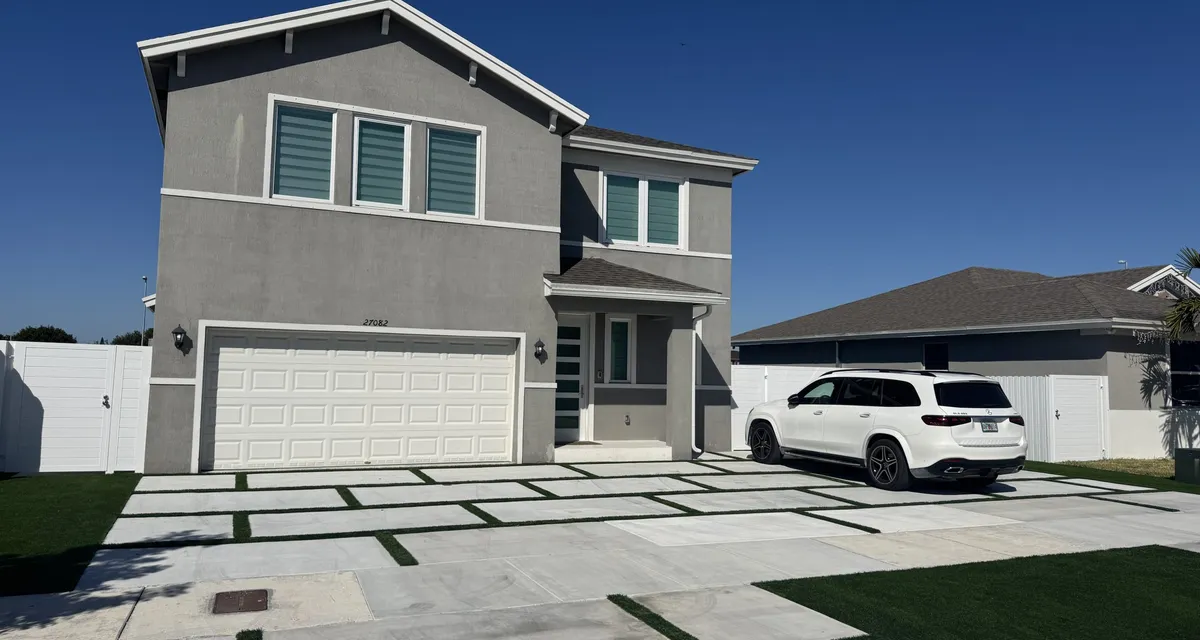
A homeowner on a private irrigation well rarely thinks about water quality until a rust-colored streak shows up somewhere it shouldn’t - a stucco wall, a white fence post, or a stretch of artificial turf that was installed looking flawless a year earlier. It’s a narrower problem than most turf questions, because municipal water essentially never causes it, but on the acreage lots and older estate properties scattered through the affluent corridor that still run an irrigation well, it’s a real and preventable one. Here’s what actually happens, who needs to plan for it, and how it gets handled before synthetic turf ever goes down.
Is this actually a turf problem, or a water problem?
It’s a water problem that shows up on turf. High-iron or high-sulfur well water oxidizes the moment it hits air, leaving the same orange-brown mineral film on artificial grass fiber that it would leave on a white dock piling or a pressure-washed driveway. The turf itself doesn’t react chemically or degrade from it - the discoloration sits on the surface of the fiber and backing, which is actually good news, because it means the fix is about managing where that water lands, not about the turf product failing.
Why some properties see it and most never do
The deciding factor is the water source, not the yard. A home on county or city water supply has nothing to worry about - that water is treated and essentially mineral-stain-free by the time it reaches a sprinkler head. The risk is specific to properties still running an irrigation well for some or all of their landscaping, which shows up more often on the larger lots around Parkland and Southwest Ranches, and on older homes in Davie and Weston where a well predates the municipal line that now serves the house. A single well zone that keeps firing onto or near a turf edge is enough to cause visible staining within a season.
Catching it before the crew ever rolls out turf
This is where it gets solved - during the same walkthrough where every other irrigation zone gets mapped before a residential conversion. Any zone confirmed to be drawing from a well gets flagged the same way a lawn-only sprinkler head does, except instead of simply capping it, Govorex routes it away from the finished turf footprint or redirects it to the planting beds it’s actually meant to serve. A well that’s only feeding a hedge line or specimen trees along the property edge can keep running exactly as before, as long as its spray pattern stays off the new synthetic grass.
What to do if staining already set in
An existing lawn with visible rust streaking from a well zone that was never addressed isn’t a lost cause. In most cases the fix is the same as the prevention - identify the exact head or zone causing the overspray and redirect or cap it - paired with a straightforward cleaning of the affected turf section rather than a full replacement. The staining sits on the fiber surface, so it responds to the same kind of targeted cleaning a stained paver or fence post would, once the water source causing it stops reaching the turf.
Getting a well-irrigated property looked at
Every well and irrigation layout is different, which is exactly why this gets walked and mapped in person rather than assumed from a quote over the phone. The instant quote tool gives a starting number for the turf itself, and residential artificial grass installations include the full irrigation review - well zones included - as part of the standard base-prep process. Every project comes from a crew with 15+ years of experience, licensed and insured, serving Broward and Palm Beach County, with most installs finished within 48 hours and financing available: half down to start, the balance split across 12 equal monthly payments with no interest, subject to approval.
Want your yard's real number? Outline it on a satellite map and see starting prices and a 12-month payment plan in about a minute — no sign-up.
Try the Instant Quote Calculator →