Artificial Turf in a South Florida Cold Snap
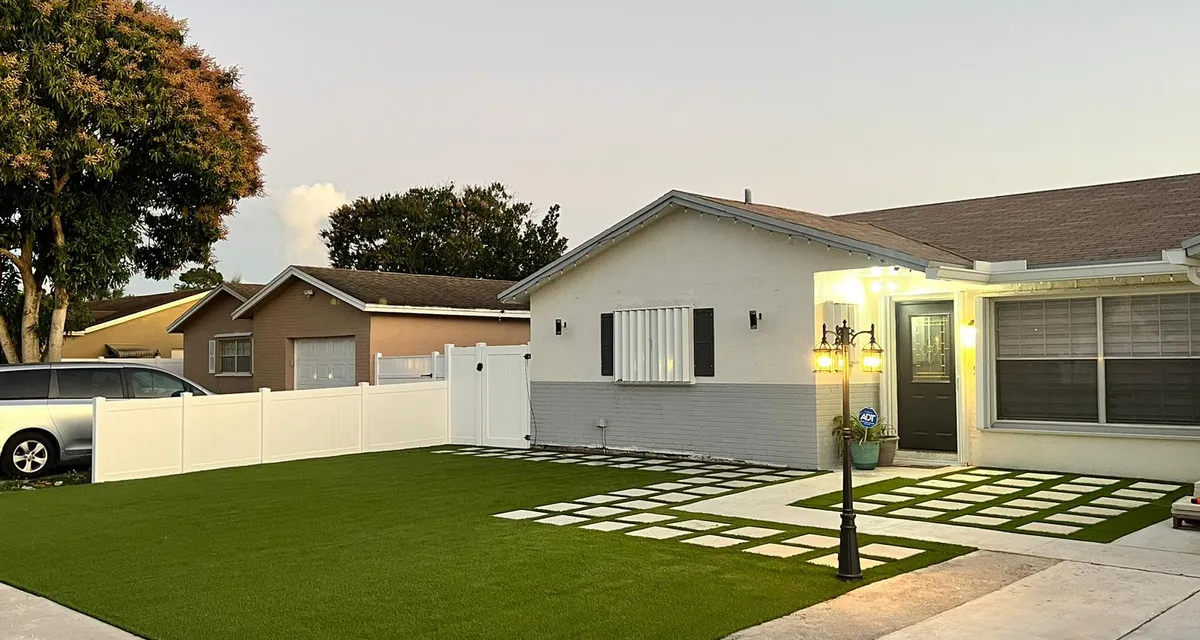
South Florida doesn’t really have a winter, but it has a handful of mornings every year - usually tied to a cold front sweeping down from the north - when the temperature drops into the 30s or 40s and stays there until sunrise. Homeowners who’ve just put in artificial turf, or who are pricing it out ahead of one of those fronts, tend to ask the same thing: does synthetic turf actually hold up when it’s cold, or is this one more thing that only gets tested once a year and then quietly fails? The short answer is that artificial grass is built for a far wider range of conditions than a once-a-winter cold snap, and the handful of things that do change are minor enough that most homeowners never notice them.
Does it actually get cold enough here to matter?
A genuine cold snap in Broward or Palm Beach County means overnight lows somewhere in the high 30s to low 40s, maybe one or two mornings a year, not a sustained freeze that lasts for days or weeks. That’s a mild stress test by the standards most synthetic turf is manufactured and rated for - the same polyethylene fiber installed in South Florida backyards is also installed in markets that see real winters, so a single cool front isn’t pushing the material anywhere near its actual limits. Homeowners from Jupiter to Fort Lauderdale see the same handful of cold mornings each year, and the turf behaves the same way across the whole corridor.
Will the blades go stiff or brittle?
This is the question that actually matters, and the answer is no - not from one overnight dip. Turf fiber loses flexibility only after extended exposure to hard freezing temperatures, the kind that doesn’t occur in this part of Florida even in an unusual year. A cold morning might make the blades feel slightly cooler and a touch firmer underfoot for an hour or two after sunrise, the same way a tile floor feels cold before the house warms up, but that’s a temperature sensation, not a change in the material itself.
What happens with frost or dew on a cold morning?
Dew settles on synthetic grass the same way it does on a natural lawn, and on the rare morning cold enough to produce a light frost, both surfaces can pick up a thin white coating before sunrise. The difference shows up once the sun comes out: turf doesn’t hold water in soil or thatch the way a real lawn does, so it dries out faster and is usually free of moisture well before a natural lawn in the same yard. There’s nothing to treat or protect - it clears on its own.
Does a cold front slow down a scheduled installation?
A cooler-than-usual day doesn’t change how a Govorex crew preps base, cuts seams, or works infill into the fibers, so a scheduled install in Palm Beach Gardens or Weston goes forward on a 45-degree morning the same way it would on a 75-degree one. The only weather that actually pushes a job is active rain or lightning, which affects safety and base compaction - a cold front passing through without rain behind it isn’t a reason to reschedule.
Does turf look different than a natural lawn after a cold snap?
Here’s where artificial turf actually has an advantage during a cold front rather than a disadvantage. St. Augustine and other warm-season grasses common across the region can go semi-dormant or brown after a hard cold snap, especially in shaded yards or ones already under stress from the dry season. A synthetic lawn doesn’t respond to temperature that way at all - it holds the same color and density through a cold front that it does in August, which is part of why homeowners in Boca Raton who’ve already converted don’t think about the weather forecast the way their neighbors with real grass still do.
A once-a-year cold front isn’t a reason to delay a turf project or worry about one already installed - it’s one of the few weather events in South Florida that artificial grass handles with zero extra effort. Run a yard’s dimensions through the instant quote tool for a starting number any time of year, or book a free on-site visit through residential artificial grass to get a plan that doesn’t change based on the forecast.
Want your yard's real number? Outline it on a satellite map and see starting prices and a 12-month payment plan in about a minute — no sign-up.
Try the Instant Quote Calculator →