Does Artificial Turf Grow Mold in South Florida Humidity?
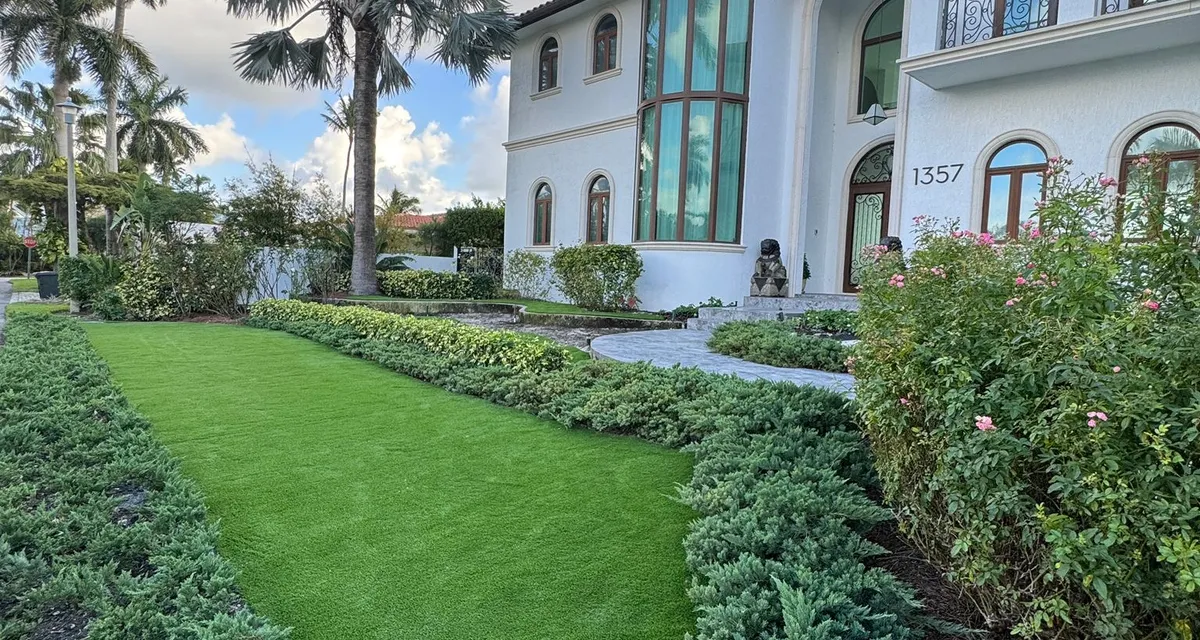
Ask a homeowner in a state this humid what’s holding them back from artificial turf, and after the up-front cost, the next worry is almost always some version of the same question: won’t this stuff just grow mold sitting outside in South Florida’s air for years? It’s a reasonable thing to picture - anyone who’s found mildew on a screened porch or a shaded fence line knows how fast moisture and shade turn into a problem here. The direct answer is that properly installed turf doesn’t grow mold on its own, because there’s no organic material in synthetic fiber or infill for mold to feed on - but the word “properly” is carrying real weight in a climate this wet, and it’s worth understanding exactly what it means before signing a contract.
Turf itself vs. what lands on top of it
The fiber and infill in a modern artificial grass system are synthetic - polyethylene blades over a permeable backing, with an infill that’s inert. None of that is food for mold or mildew the way dead grass clippings, mulch, or damp soil would be. What actually grows is a surface film that forms on organic debris that lands on the turf and doesn’t get cleared - leaf litter under an oak canopy, pollen buildup during a heavy bloom season, grass clippings blown over from a neighbor’s mower, or pet waste that sat instead of getting rinsed. That distinction matters because it changes the fix: the problem isn’t the turf, it’s whatever organic layer is sitting on top of it and trapping water underneath.
Permeable backing vs. the cheap, solid kind
This is where installation quality actually separates a lawn that stays clean for years from one that develops a musty smell within a season. A fully permeable backing lets rain and irrigation water pass straight through into a properly compacted, well-draining base below - nothing pools, nothing sits against the underside of the turf long enough to start breaking down organic matter trapped there. Cheaper systems sometimes use a solid or partially permeable backing that was never designed for a climate that gets a daily summer downpour; water has nowhere to go but sideways or standing, and that’s where the actual mildew problems start. It’s the same distinction that matters for pet turf, where permeable backing keeps urine from pooling the same way it keeps rainwater from pooling.
A sunny open lawn vs. a shaded, tight corner
An open backyard in full sun in Coral Springs dries out within an hour or two of a rainstorm and almost never needs a second thought. A narrow side yard wedged between two houses, or a patch shaded most of the day by an oak canopy near Wellington, holds moisture longer no matter how good the drainage underneath is - shade and low airflow slow evaporation regardless of what’s installed. That’s not a reason to skip turf in a shaded spot; it’s a reason the base, infill, and drainage slope need to be specified for that specific corner of the yard rather than assumed to match the rest of the lawn, which is exactly what a site visit is for.
Letting it happen vs. a five-minute routine
The gap between a lawn that never has a mildew problem and one that develops dark spots almost always comes down to whether organic debris gets cleared on a normal schedule. A quick blow or sweep after a heavy leaf drop, an occasional hose-down in a shaded corner, and rinsing off anywhere pets go keeps the surface from ever building up the layer mildew needs to take hold. Skipping that for months in a low-airflow spot is what turns a non-issue into a visible one - the maintenance guide covers the full seasonal routine, but the mold-prevention part of it is really just this one habit.
Getting it built right the first time
None of this requires a special product tier or an add-on fee - permeable backing and a properly compacted, well-draining base are standard on every Govorex installation, whether the yard sits in full sun in Jupiter or a shaded courtyard anywhere else in the corridor. Landscape turf starts at $6.99 per square foot installed, pet turf at $8.99, and putting greens at $12, confirmed for your yard at a free on-site consultation where any shaded or tight-airflow areas get identified and specified for before the crew ever shows up. Run the instant quote tool for a starting number, and ask about the same 50% down, 12-month no-interest financing plan available on every residential project across Broward and Palm Beach County.
Want your yard's real number? Outline it on a satellite map and see starting prices and a 12-month payment plan in about a minute — no sign-up.
Try the Instant Quote Calculator →