Artificial Grass Maintenance: The 10-Minute Guide
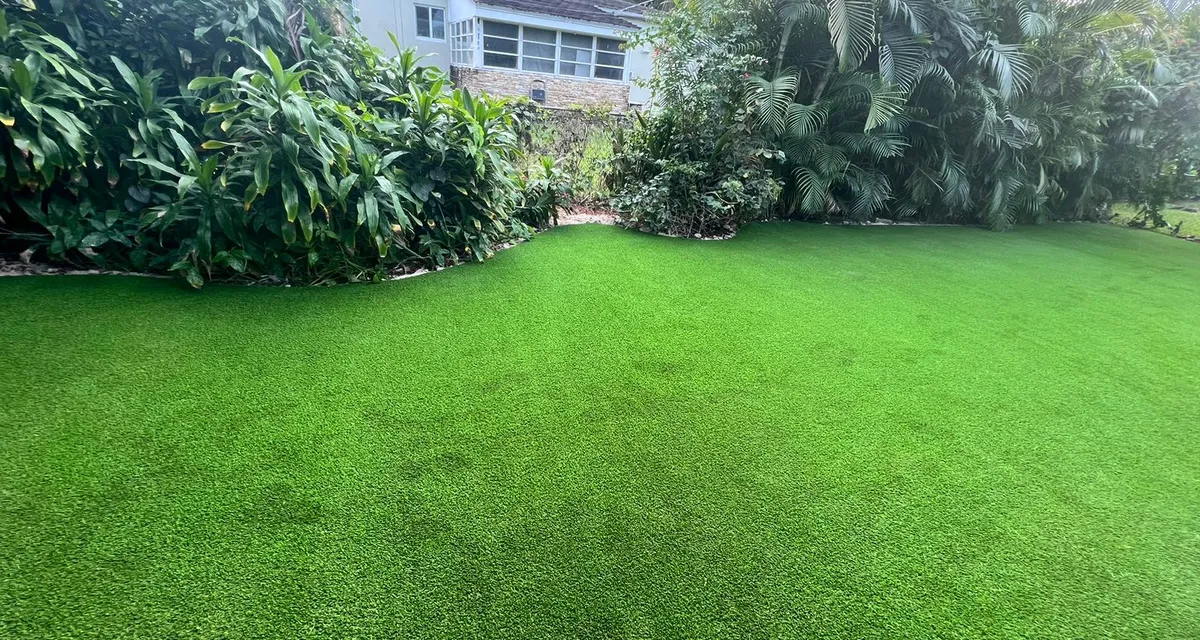
The best thing about artificial grass maintenance is how little there is to write about. A natural South Florida lawn is a part-time job — mow, edge, water, fertilize, treat for chinch bugs, repeat until exhausted. Synthetic turf’s entire owner’s manual fits on an index card. Here it is, expanded just enough to be useful.
The routine: 10 minutes a month
Rinse when it looks dusty. A quick pass with the hose clears pollen, dust, and whatever the neighborhood’s mango trees contributed. Between summer storms, nature usually handles this for free.
Brush the busy spots. Fibers in high-traffic lanes — the path to the pool, the kids’ goal mouth, the dog’s patrol route — gradually lean over. A stiff synthetic-bristle broom (never metal) swept against the grain stands them back up. Monthly-ish in busy zones, quarterly everywhere else.
Evict the leaves. A leaf blower or plastic rake in fall and after storms keeps organic debris from breaking down into the infill. Five minutes, done.
That’s it. That’s the job. Homeowners in Coral Springs and Coconut Creek who traded a weekly mow for this routine describe the same feeling: mild disbelief, then a free Saturday.
Pet yards: one extra step
On a proper pet turf system, cleanup is simpler than grass ever was: pick up solids, rinse the area, and let the permeable backing and antimicrobial infill do their invisible work. A weekly hose-down keeps even a three-dog yard in Boynton Beach smelling like nothing at all — which is the goal.
Spills and stains
Synthetic fibers don’t absorb like carpet, so almost everything rinses away. For the sticky exceptions — barbecue sauce, sunscreen, mystery popsicle — warm water and mild dish soap handle it. Skip harsh solvents; they’re never needed and can stress the fibers.
The short list of nevers
- No fire over the turf. Grills, fire pits, and smokers live on pavers or the patio. Melted fibers are the one injury we can’t brush out.
- No hot machines parked on it. Exhaust-hot equipment can scorch a patch in minutes.
- No metal rakes or wire brushes. Plastic and synthetic bristles only.
- Mind reflected sunlight. Energy-efficient windows can focus a hot beam onto one turf spot; if you notice a suspicious stripe of glare, a screen or awning ends the issue.
Maintenance is where turf pays you back
Every skipped mow, every irrigation zone that stays off, every pest treatment you don’t schedule — that’s the return on investment arriving monthly. It’s also why long-lived turf and low maintenance are the same story: cared-for turf easily reaches the 15+ year lifespan we covered in how long artificial grass lasts.
Would you rather never think about any of this? Govorex also offers artificial grass maintenance plans — scheduled monthly or quarterly professional care, with a pet-focused deodorizing tier — for owners who want the ten minutes back too.
Still maintaining the old-fashioned lawn? Price the alternative in about a minute with the instant quote calculator — the monthly payment often looks a lot like the lawn service bill it replaces.
Want your yard's real number? Outline it on a satellite map and see starting prices and a 12-month payment plan in about a minute — no sign-up.
Try the Instant Quote Calculator →