Is Artificial Turf Safe During Florida Lightning Storms?
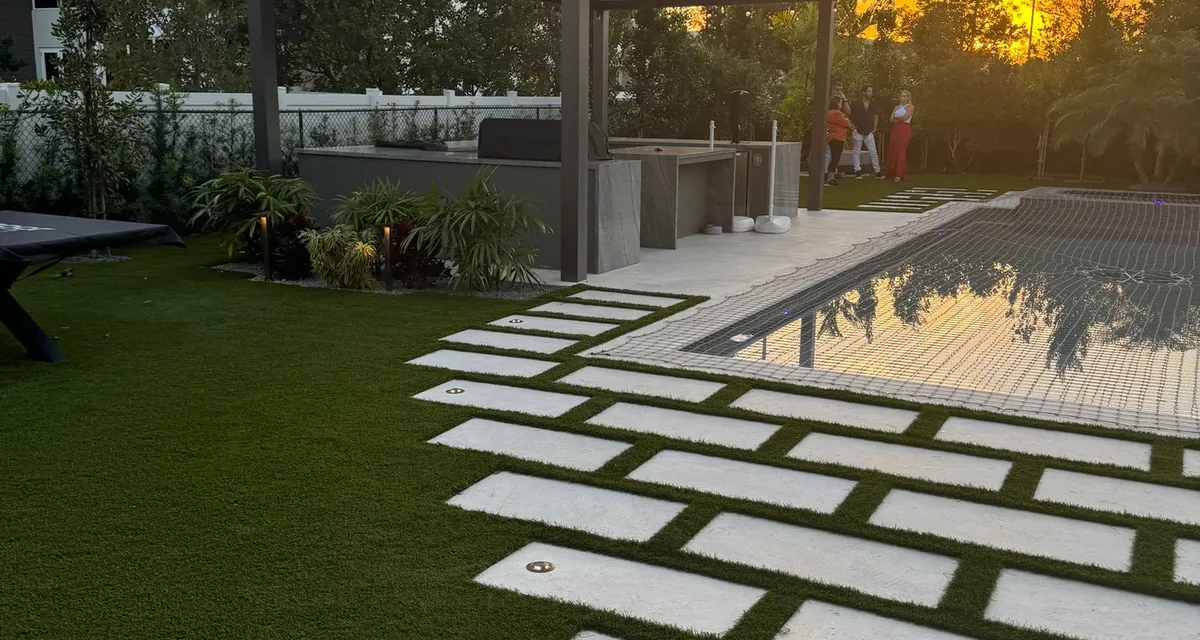
Here’s the direct answer: switching from natural grass to artificial turf does not change your lightning risk. South Florida sees more thunderstorm activity than almost anywhere else in the country, and homeowners researching artificial grass for a yard in Fort Lauderdale or Boca Raton sometimes ask, reasonably, whether a plastic lawn behaves differently than sod once the afternoon sky turns dark. It doesn’t - but the reasons why, and what actually matters when a storm rolls through, are worth walking through.
Does artificial turf attract lightning strikes?
No. The fibers in a synthetic lawn are polyethylene plastic, the backing underneath is plastic, and the infill brushed into the blades is typically sand or a rubber compound - none of it conducts electricity any better than a natural lawn’s soil and grass blades do. Lightning is drawn to height, isolation, and clear conductive paths: a tall tree, a metal pole, open water, a person standing alone in a field. A flat lawn, whether it’s turf or sod, isn’t on that list either way.
What’s actually dangerous outside during a Florida storm?
The real risk factors are the same ones meteorologists have been repeating for years, and they have nothing to do with landscaping material: being the tallest thing in an open area, standing near or in water, and touching metal that runs a long, exposed path - a chain-link fence, an ungrounded umbrella frame, a metal bleacher. A turf lawn in Wellington or a sod lawn two doors down carry the exact same exposure if someone’s standing on them when a storm is overhead. The only rule that actually reduces risk is the familiar one: once thunder is audible, get inside and stay there until well after the last rumble.
Do the fasteners and edging used in a turf install change anything?
Not in any meaningful way. A professional installation anchors the turf’s perimeter with galvanized nails or staples and sometimes aluminum or steel edging along a driveway or walkway, all of it sitting low and flush with the ground. That’s no different, electrically speaking, than a paver border, a fence post, or any other piece of ground-level hardware already in most South Florida yards. It doesn’t turn a lawn into a lightning rod, and it doesn’t need any special treatment before a storm season starts.
Will my HOA ask about storm-season drainage when turf goes in?
Often, yes - but the question boards actually care about is water movement during a sudden downpour, not electrical safety. Associations near Jupiter and across Palm Beach Gardens routinely want to see how a proposed turf lawn grades and drains before approving it, since a poorly built system can push runoff toward a neighbor’s property or a shared drainage easement. Govorex builds a compacted, free-draining base into every install and includes grading and drainage notes in the HOA packet, which is typically what a board is actually screening for.
What should happen to the yard right before and after a storm?
Treat it the way you would any outdoor space ahead of a system moving through: clear loose furniture, potted plants, and kids’ toys off the lawn so wind doesn’t drag them across the surface, then ride out the storm indoors like everyone else on the block. Once it passes, a quick hose-down and a brush through the fibers clears any grit or debris. A properly installed synthetic turf lawn doesn’t need mowing, reseeding, or the kind of post-storm lawn triage that a damaged patch of sod does - our guide to turf after a storm covers that walkthrough in more detail.
What this costs, and how financing works
None of the storm-related groundwork above is an upsell - the compacted base and drainage engineering that keep a lawn behaving well in a downpour are part of Govorex’s standard installation, not an add-on line item. Residential turf starts at $6.99 per square foot fully installed, pet turf at $8.99, and putting greens at $12, confirmed for your yard at a free on-site consultation. Financing doesn’t change based on the season either: half the project cost is due when the crew starts, the remaining balance splits evenly across the next 12 months, and no interest gets added either way, subject to approval.
Getting a real number for your yard
A thunderstorm rolling through doesn’t change what matters in choosing artificial grass over natural grass - drainage, base quality, and a licensed, insured crew still do the heavy lifting either way. Trace your property on the instant quote calculator for a starting estimate in about a minute, or request a free site visit for yards in Fort Lauderdale, Wellington, Jupiter, and the rest of the corridor Govorex has served for more than 15 years.
Want your yard's real number? Outline it on a satellite map and see starting prices and a 12-month payment plan in about a minute — no sign-up.
Try the Instant Quote Calculator →