Sports Field Turf for South Florida Backyards & HOAs
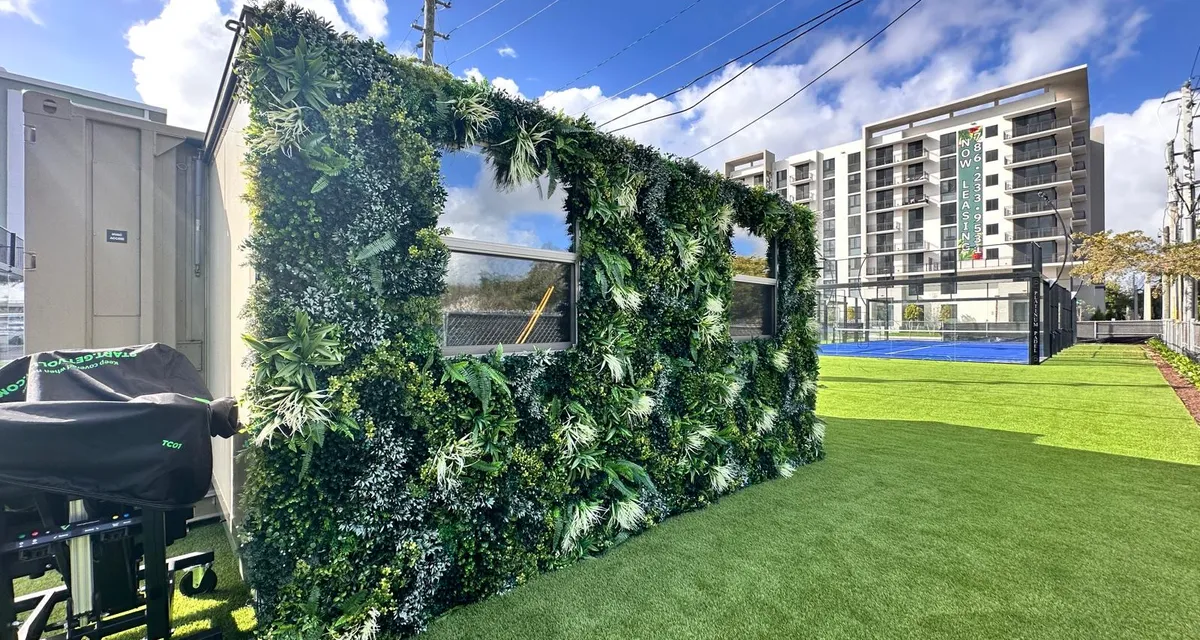
A backyard pickleball court and a clubhouse practice field face the same test: can the surface take repeated hard footwork, day after day, without breaking down at the exact spots where players plant and pivot. That’s a different question than “does this yard need new grass,” and it’s why sports field turf gets planned differently than a standard lawn conversion. Whether it’s a single homeowner in Weston squeezing a court into a side yard or an HOA in Parkland sizing up a shared amenity, the decisions that matter come in a specific order.
Start with the sport, not the square footage
The first decision isn’t size - it’s what the surface has to survive. A putting green (already its own thing) needs a completely different build than a pickleball court, and a pickleball court needs a different fiber and infill than a batting cage mat or a soccer practice pad. Lateral cutting sports need firmer footing and shorter, denser pile; ball-bounce sports like bocce need a flatter, more consistent surface than a general-use lawn. Picking the sport - or the two or three sports a flexible pad needs to handle - comes before anything else gets specified.
How much space the activity actually needs
Once the sport is set, the footprint follows regulation or practical dimensions rather than however much yard happens to be available. A backyard pickleball court runs a fixed size; a batting cage or bocce lane is similarly fixed. That’s a useful constraint - it turns “how big should this be” into a known number, and it usually means the turfed area is smaller than homeowners expect, tucked into a side yard or a corner of open lawn rather than requiring the whole property.
The base and infill decision
This is where sports turf diverges most from standard artificial grass. A base engineered for foot traffic and mowing is not the same as one engineered for sliding, sprinting, and repeated hard stops - the compaction, drainage capacity, and shock-rated infill all get specified around the sport’s actual demands. Skipping this step to save cost is the single most common reason a DIY-adjacent sports surface feels “off” underfoot within a season: the color holds, but the footing doesn’t.
Getting sign-off before the crew shows up
A dedicated court or field reads differently to an HOA board than a routine lawn swap does, mostly because it’s a visible, purpose-built structure rather than a like-for-like replacement. Boards near Coral Springs and Boca Raton generally want to see how the addition looks from the street, how it drains during summer storms, and whether it matches community standards - the same spec sheet and sample packet Govorex uses for standard turf approvals covers this, just framed around the court’s dimensions and use.
Budgeting for a court-grade install
Sports-grade fiber and infill sit above Govorex’s $6.99-per-square-foot landscape starting rate, since the materials and base work are built to a tougher standard than a lawn needs. The exact number depends on the sport, the footprint, and site conditions, which is why a free on-site consultation - not a flat per-square-foot quote - is how these get priced. Financing works the same as any other project: 50% down when installation starts, the rest split evenly across 12 monthly payments, no interest, subject to approval.
Getting a real plan for the space
A sports surface is one of the few turf projects worth skipping the instant quote tool for and going straight to a site visit, since the sport and footprint drive the number more than raw square footage does. Govorex’s sports field turf systems cover everything from a single backyard court to a shared HOA amenity, and standard residential artificial grass can cover the rest of the yard for anyone converting both at the same time. Every project comes from a crew with 15+ years of experience, licensed and insured, serving Broward and Palm Beach County.
Want your yard's real number? Outline it on a satellite map and see starting prices and a 12-month payment plan in about a minute — no sign-up.
Try the Instant Quote Calculator →