Best Time to Install Artificial Grass in South Florida
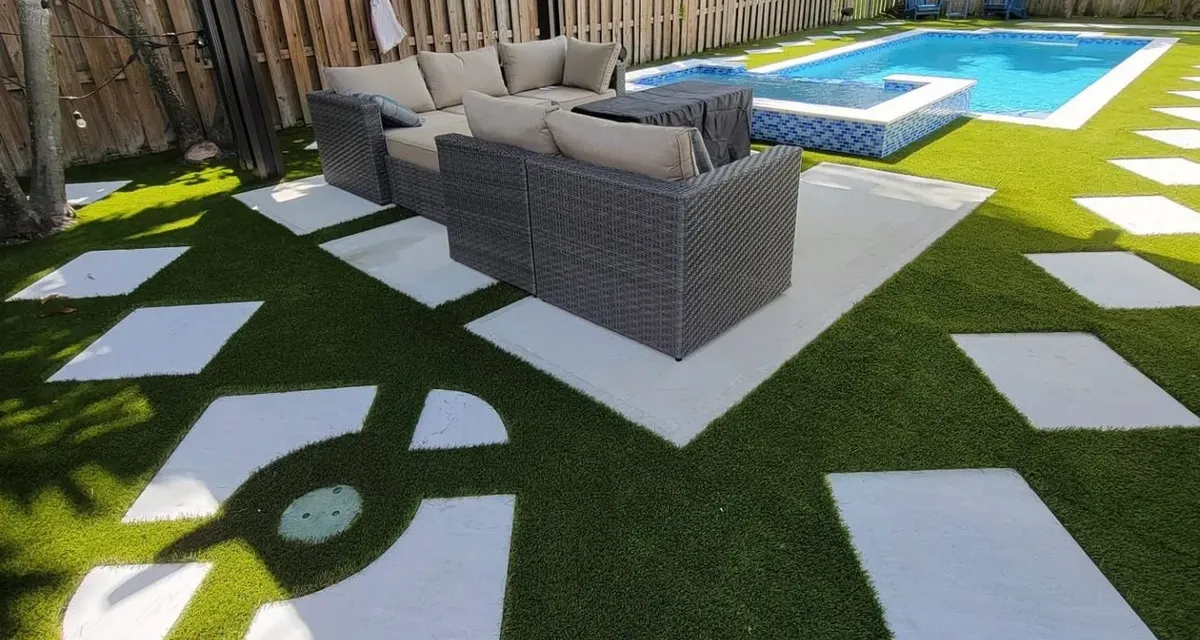
The question comes up in almost every consultation, right after color and turf style: how soon can this actually get scheduled, and does it matter whether it happens in April or September? For most Broward and Palm Beach County homeowners, artificial grass installation runs year-round with no true off-limits window - but rainy season, hurricane season, and ordinary booking demand each nudge the calendar a little differently, and knowing which one applies to a specific project makes scheduling far less of a guessing game.
Does South Florida even have an off-season for turf installation?
Not in the way colder climates do. There is no frozen ground or dormant growing season here, so a crew can excavate, grade, and lay synthetic turf in January just as easily as in July. What shifts throughout the year isn’t whether the work can happen - it’s how many other homeowners are booking at the same time, and how much weather buffer a given month typically needs.
How much does rainy season actually slow things down?
South Florida’s wet season, roughly June through October, brings frequent afternoon storms rather than sustained rain, and a single storm rarely derails a scheduled project. The base underneath a properly built lawn is engineered to handle heavy rain by design, so a normal downpour is a delay of hours, not days. The exception is a multi-day soaking system, which can push a start date briefly - something Govorex accounts for when scheduling summer installs rather than promising a date it can’t guarantee.
Should hurricane season change your plans?
Hurricane season overlaps almost entirely with rainy season, and it adds one real variable: an approaching named storm pauses active job sites until it passes, purely for crew safety and site conditions. That’s a temporary hold, not a lost project - work resumes once the storm clears. Homeowners in storm-exposed areas like Fort Lauderdale or coastal Palm Beach who want a firm, unmovable date sometimes prefer scheduling outside that window entirely, while others are comfortable with the small chance of a short delay in exchange for booking sooner.
Is dry season really the best window?
Dry season, roughly November through May, is popular for a reason: consistently clear weather means installs run on schedule with almost no rain-related buffer built in. It’s also when demand peaks, since a lot of Boca Raton and Palm Beach homeowners want turf in before spring entertaining season, which means booking further ahead matters more than it does in a quieter month. Dry season isn’t objectively “better” turf-building weather so much as it’s more predictable - and more in demand.
How far ahead should you book?
The honest answer depends less on the calendar and more on current demand, which is why the fastest way to get a real date is a free on-site consultation rather than guessing from a seasonal rule of thumb. A homeowner in Parkland calling in late summer, when the spring rush has cleared, often gets a start date faster than one calling in March. Either way, once a design visit locks in the turf style and layout, installation itself still wraps inside the standard 48-hour window.
Getting a real date instead of a guess
Every season in Broward and Palm Beach County works for artificial grass installation - the differences are in booking speed and weather buffer, not whether the job gets done right. The instant quote tool gives a starting price for a specific yard in minutes, and residential artificial grass covers the full scope from old-lawn removal through the finished surface. Every project comes from a crew with 15+ years of experience, licensed and insured, with financing available at 50% down and 12 no-interest monthly payments, subject to approval - a free consultation is what turns “sometime this year” into an actual date on the calendar.
Want your yard's real number? Outline it on a satellite map and see starting prices and a 12-month payment plan in about a minute — no sign-up.
Try the Instant Quote Calculator →