Artificial Turf vs. Pavers vs. Gravel in South Florida
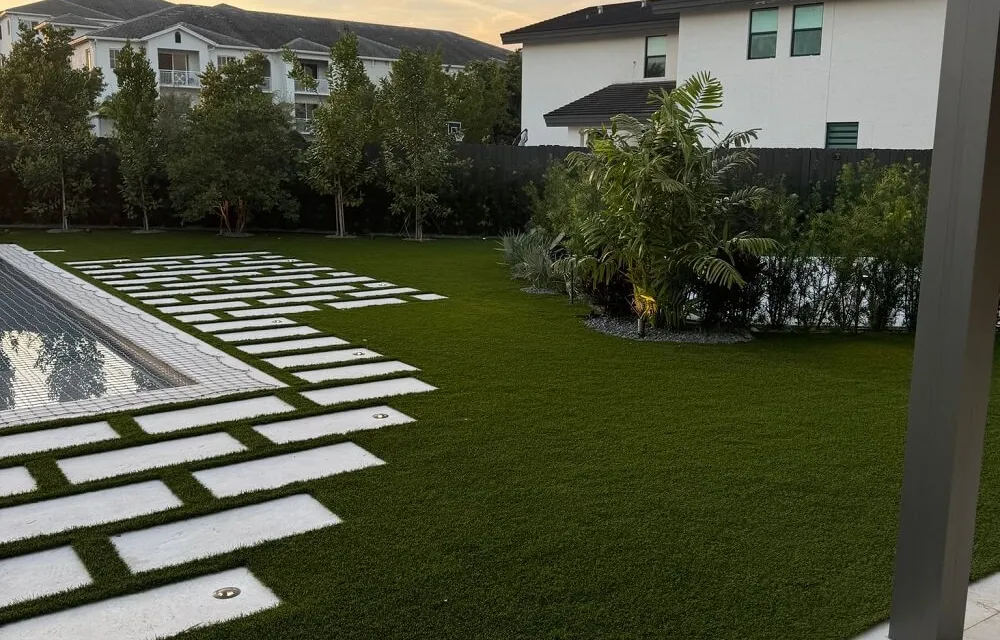
Every yard renovation in Broward and Palm Beach County eventually comes down to the same decision: what actually covers the ground. Artificial turf, pavers, and gravel each solve a different problem, and homeowners comparing artificial grass against hardscape options usually aren’t choosing a favorite - they’re matching a material to a specific patch of yard. A side strip that never gets foot traffic doesn’t need the same answer as a pool deck or a front lawn. Here’s how to sort the decision by what each part of your property is actually for.
Start with what the space is for, not what looks nicest online
A material that’s perfect for a walkway can be the wrong call for a lawn, and vice versa. Areas people walk, sit, or park on repeatedly - entries, patios, driveways - are hardscape territory, which points toward pavers. Areas meant to look and feel like a lawn - front yards, backyards, spaces around a pool where bare feet matter - point toward synthetic turf. Narrow utility strips, side-yard drainage paths, and areas that rarely get seen up close are where gravel still earns a place. Sorting the yard this way before pricing anything out saves homeowners from comparing three materials that were never actually competing for the same square footage.
Rule out gravel first if any of these apply
Gravel is the cheapest material per square foot and the most maintenance-heavy over time in this climate. South Florida’s combination of heat, humidity, and heavy rain pushes weeds up through loose stone faster than in drier regions, and gravel migrates - into pool decks, onto pavers, into a neighboring turf lawn - unless it’s edged and topped off regularly. It also holds heat and shifts underfoot, which rules it out fast for anywhere kids or pets spend time barefoot. If the space in question is a front lawn, backyard, or anywhere near a pool, gravel is usually eliminated at this stage.
The upfront cost, and what’s actually included in it
Artificial grass starts at $6.99 per square foot fully installed with Govorex, with pet turf from $8.99 and putting greens from $12. That rate already covers removing what’s there now, compacting and grading a base built to drain, infill, and cleanup - not turf material alone. Paver installations typically run higher once excavation, base rock, and edge restraints are priced in, since pavers are a masonry job as much as a landscaping one. Gravel looks cheapest on paper, but the ongoing cost of replenishing stone and pulling weeds adds up over a few seasons in a way the other two don’t.
Where turf wins in Florida’s climate
A well-installed synthetic lawn drains faster than natural soil and doesn’t hold standing water the way a poorly graded gravel bed can after a South Florida downpour. It also stays green and even through the wet season and the dry stretches alike, with none of the brown patches, mud, or reseeding that comes with a real lawn fighting sandy soil. Homeowners near Weston and Parkland most often choose turf for exactly this reason - a consistent lawn without a sprinkler system working overtime.
Where pavers still make more sense than turf
Pavers are the right call anywhere structural load or heavy foot traffic is the priority - driveways, entry walkways, and pool decks that need a hard, stable surface. They also hold up to vehicle weight in ways turf isn’t built for. Around Palm Beach Gardens and similar communities, the most common approach isn’t turf instead of pavers - it’s both, laid out so each material covers the part of the yard it’s actually suited for.
Mixing materials instead of picking one
The strongest yards in Broward and Palm Beach County rarely use just one surface. Paver and turf strip driveways are one of Govorex’s most requested combination projects - bands of turf set between paver runners soften a driveway’s look and cut down on reflected heat, while the pavers still carry vehicle weight where it matters. The same pairing works around a pool deck or a patio border, with turf framing the hardscape instead of competing with it.
HOA approval differs by material
Boards across the region are typically fastest to approve pavers, since they’re a familiar hardscape material. Turf approval has gotten easier as premium blends read as a natural lawn rather than an obviously synthetic one, and Govorex prepares spec sheets and physical samples for board review at no extra cost. Gravel as a primary lawn surface is the material most likely to draw questions, since many boards consider it unfinished rather than landscaped.
Making the call, and paying for it
Once the material is chosen, financing works the same way regardless of which one it is: 50% down when the work starts, and the rest split into 12 equal monthly payments with no interest, subject to approval. For most Broward and Palm Beach yards, the answer isn’t a single winner - it’s turf for the lawn, pavers for the walkway or drive, and gravel reserved for the strip nobody looks at twice. The instant quote calculator gives a starting number for the turf portion from a satellite photo in about a minute, and a free on-site consultation covers the rest of the yard, material by material. Govorex has installed residential artificial grass across Broward and Palm Beach County for 15+ years, licensed and insured, with most turf projects finished inside a 48-hour window.
Want your yard's real number? Outline it on a satellite map and see starting prices and a 12-month payment plan in about a minute — no sign-up.
Try the Instant Quote Calculator →