Artificial Turf Drainage for King Tide Flooding in Florida
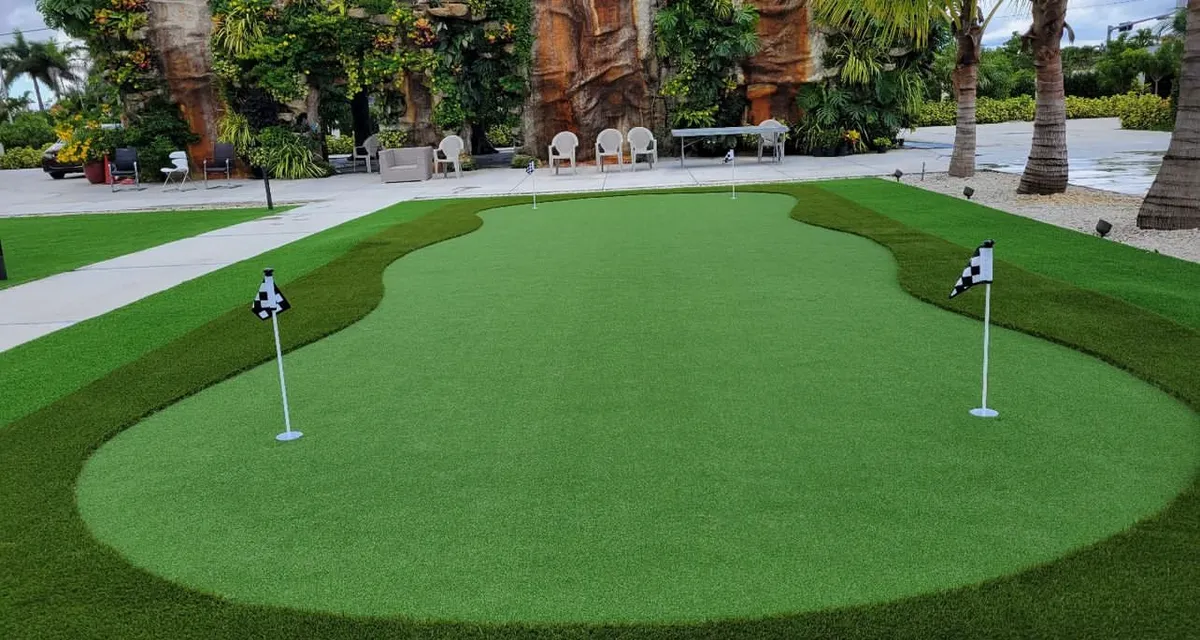
The first sign is usually a homeowner walking out to a canal-front yard in Fort Lauderdale on a cloudless September morning and finding the back third of the lawn under an inch of water that has nothing to do with rain. That’s a king tide - a seasonal, entirely predictable high tide that pushes water up through storm drains and saturated ground along the Intracoastal and canal system every fall. It’s one of the more specific drainage problems artificial turf gets asked to solve in South Florida, and it behaves differently than a rainstorm does, which means the planning behind it has to as well.
What a king tide actually does to a low-lying lot
Unlike a hurricane or a summer downpour, a king tide isn’t weather - it’s the moon and sun lining up to pull the tide a foot or more higher than normal, typically peaking on a handful of days between September and November. On a lot that sits close to sea level along a canal, the Intracoastal, or a low-lying inland street tied into the same drainage system, that extra tidal push can show up as standing water in a yard with clear skies overhead. Homeowners in Lighthouse Point and other canal communities tend to know the calendar dates by heart once they’ve lived through a few seasons of it.
Why a live lawn takes the worst of it every fall
Natural grass sits directly on soil that’s already saturated from a summer of rain by the time king tide season arrives, so it has almost no capacity left to absorb anything extra. The water has nowhere to go but up and across the surface, which is what leaves a live lawn muddy, matted, and sometimes dead in patches by the time the tide recedes days later. It’s not a one-time event either - the cycle repeats every month through the season, so a lawn that never fully dries out between tides degrades faster than the same yard would from ordinary rain.
What’s different underneath a properly built turf system
Synthetic grass itself doesn’t stop tidal water from rising - nothing installed at ground level can hold back a foot of extra tide. What changes is what happens once the water arrives and once it recedes. A permeable turf backing over a compacted, free-draining aggregate base lets water move through instead of pooling on top, and that same structure drains far faster once the tide drops, so the yard isn’t left waterlogged for days the way exposed soil is. For a lot that floods on a predictable seasonal schedule rather than randomly, that faster recovery is often the more valuable half of the equation.
Building the base for the specific address, not a general spec
A canal-front lot in Fort Lauderdale and an inland street that floods through a shared storm drain don’t move water the same way, so the base gets engineered around what the specific property actually does during a tidal event - base depth, discharge points, and sometimes a French drain or redirected downspout added at the low corner of the yard. Homeowners further along the coast in Delray Beach dealing with a similar tidal pattern go through the same site-specific assessment rather than a one-size drainage plan, since guessing at capacity on a flood-prone lot is exactly how a project underperforms in its first real season.
Getting the board on board before the water shows up
A drainage-focused turf project on a canal or low-lying street still goes through the same HOA or architectural review as any other exterior change, but boards in these neighborhoods tend to look favorably on added drainage capacity since it benefits more than one property. Govorex builds the sample, site plan, and a short note on where the extra water discharges into the same package used for a standard turf approval, timed so the paperwork clears before the next seasonal peak rather than during it.
What it costs and when to start
Landscape turf still starts at $6.99 per square foot installed, with the added drainage work priced on top based on what the lot actually needs - a deeper base section, extra drain line, or redirected discharge point - confirmed at a free consultation rather than guessed over the phone. Most projects, drainage included, still finish inside the standard 48-hour window, and financing follows the same terms as any other job: 50% down when installation starts, the balance split across 12 equal monthly payments, no interest, subject to approval.
Flood-prone lots are worth a site visit rather than an instant quote estimate alone, since tidal drainage capacity isn’t something square footage predicts on its own. Residential artificial grass installs cover the full project from old lawn removal through the finished, drainage-ready surface, and our guide to artificial grass drainage in rainy season covers the storm-water side of the same underlying base work. Every Govorex installation comes from a crew with 15+ years of experience, licensed and insured, serving canal-front and inland properties across Broward and Palm Beach County alike.
Want your yard's real number? Outline it on a satellite map and see starting prices and a 12-month payment plan in about a minute — no sign-up.
Try the Instant Quote Calculator →