Artificial Turf HOA Violations in Broward & Palm Beach
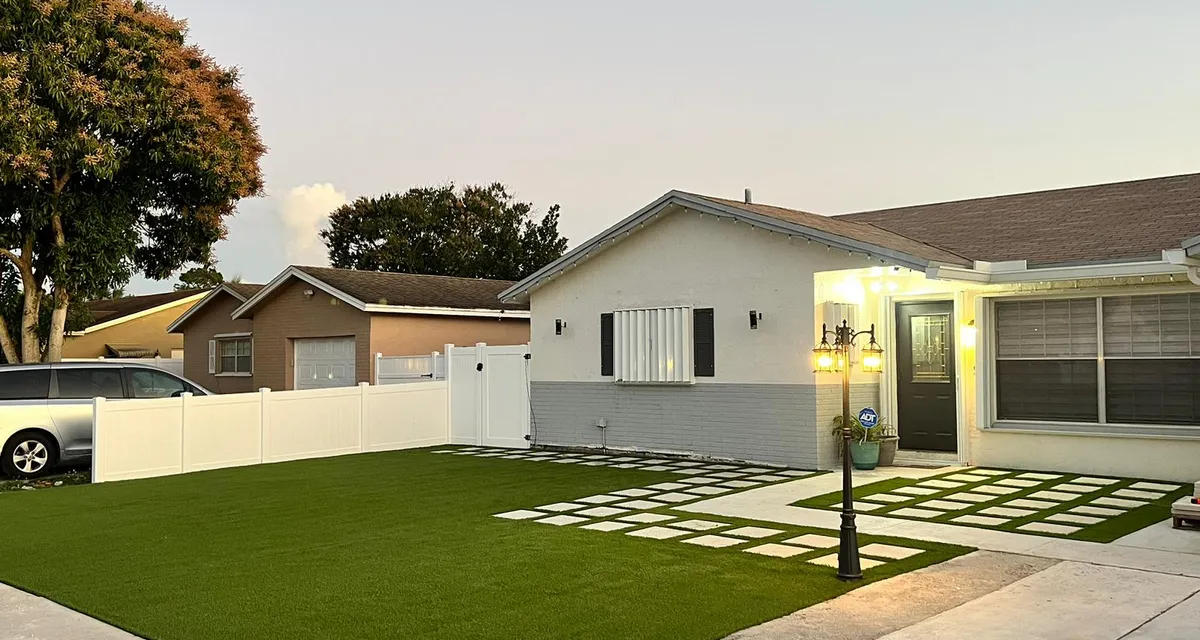
A homeowner in Wellington or Boca Raton who’s ready to swap a patchy lawn for artificial turf sometimes faces a tempting shortcut: skip the HOA paperwork, get the crew in over a weekend, and deal with the board later if anyone even notices. It’s a real option, and sometimes nobody notices for months. But installing artificial grass without HOA approval in Broward or Palm Beach County isn’t really a way to save time - it’s a bet that the board won’t ask, and boards in tightly managed communities almost always do. Here’s what’s actually at stake on each side of that bet.
Two ways this plays out
| Get approval first | Install first, ask later | |
|---|---|---|
| Timeline | Packet plus a board meeting cycle - usually a few weeks | Turf goes in immediately |
| Paperwork | Spec sheet, sample, site plan - handled once | Same packet, now submitted after a violation notice |
| Risk | Board has signed off before the crew arrives | Possible order to modify or remove the work already done |
| At resale | Nothing sitting on file | A violation may need resolving before closing |
The columns look close on paper until something goes wrong, which is why the sequence matters more than the paperwork itself. Skipping approval doesn’t remove the requirement - it just moves the conversation with the board to after the synthetic turf is already down, which is a worse position to negotiate from.
What a board can actually do about it
A board that spots unapproved turf almost never shows up with a bulldozer. The typical first step is a written notice, giving the homeowner a window to submit the standard packet - spec sheet, sample, site plan - after the fact, the same documents that would’ve cleared the project before installation. Where it gets harder is if that notice goes unanswered or the board decides the finished product doesn’t meet its standards on second look, since at that point a homeowner is negotiating from a corrected position rather than a clean one. Communities around Jupiter and Coral Springs that run tighter architectural review tend to move faster to that second step than boards that mostly rubber-stamp requests.
Undoing an installation costs more than doing it right
The real financial risk isn’t the turf itself - it’s redoing work that didn’t need to happen twice. If a board requires changes to fiber color, edging, or drainage after installation, that’s a second mobilization for materials and labor that a sample and spec sheet would have caught in the approval stage. In the rare case a board orders full removal, the homeowner is paying to tear out a finished lawn and start over, on top of whatever the board’s own remediation timeline requires. None of that changes what synthetic grass costs to install correctly the first time - it just adds a second bill on top of it.
The paperwork moves faster than most homeowners expect
Boards in Palm Beach Gardens and similar communities typically meet monthly, so a submitted packet usually clears in a matter of weeks, not months - and the packet itself takes almost no time to put together. Govorex prepares the product spec sheet, a physical turf sample, and a simple site plan as a standard part of every project, then submits it before the crew is ever scheduled. That short wait is the entire cost of doing this the right way, measured against redoing an install or negotiating a violation after the fact.
How this shows up when you sell
An HOA violation doesn’t disappear just because a homeowner stops thinking about it - it tends to resurface during a title search or estoppel request when the home eventually sells, since an open violation typically has to be disclosed or resolved before closing. That can stall a sale at the worst possible moment, when a buyer is already under contract and expecting a clean closing date. A lawn that cleared architectural review when it went in never raises that question later, which is one more reason the paperwork is worth doing up front rather than hoping it never comes up.
Getting it right from the start
Approval isn’t a separate project - it’s a few extra days folded into the same timeline as any other artificial grass installation. Govorex builds the spec sheet, sample, and site plan into every HOA-community project at no added cost, and our guide to HOA approval walks through exactly what a board looks for before voting yes. Start with the instant quote tool for a ballpark number, then book a free on-site consultation - every installation comes from a crew with 15+ years of experience, licensed and insured, serving Broward and Palm Beach County, with most projects finished within 48 hours and financing available at 50% down and 12 equal monthly payments, no interest, subject to approval.
Want your yard's real number? Outline it on a satellite map and see starting prices and a 12-month payment plan in about a minute — no sign-up.
Try the Instant Quote Calculator →