Artificial Turf in Historic South Florida Neighborhoods
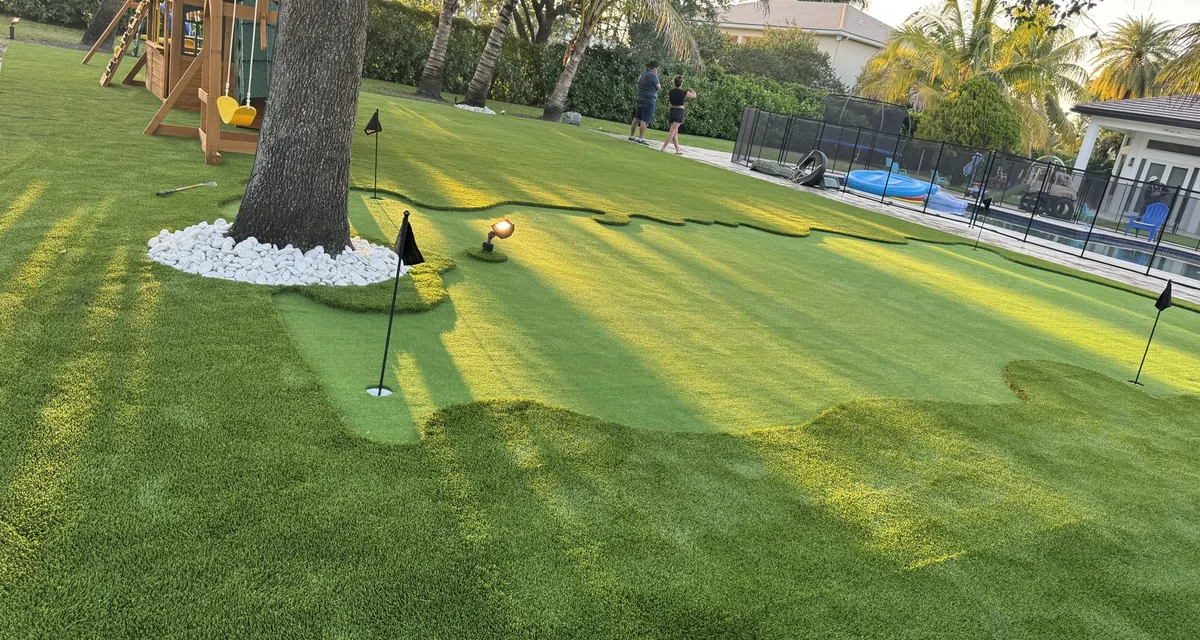
Turf approval in a historic district runs through a different process than a standard HOA sign-off, and homeowners in older pockets of Fort Lauderdale and West Palm Beach often don’t find that out until they’ve already submitted the wrong paperwork. A historic-preservation board isn’t reviewing artificial turf the way a condo or HOA architectural committee does - it’s weighing whether the change fits a streetscape the city has formally decided is worth protecting. That’s a narrower, more specific test than most synthetic turf approvals get, and it changes a few decisions before a crew ever shows up: which board actually has jurisdiction, what grade of turf reads right against a decades-old facade, and how the paperwork needs to be sequenced. Here’s how that runs, stage by stage, for anyone converting a lawn on a street with real architectural history.
Stage one: confirm which board actually has jurisdiction
Not every older neighborhood carries a formal historic designation, and the two get confused constantly. Rio Vista and Colee Hammock in Fort Lauderdale, and Flamingo Park and Old Northwood in West Palm Beach, are true historic districts with their own review process layered on top of (or instead of) a standard HOA. A street that’s simply old and well-kept, without that formal designation, goes through the ordinary architectural review most Broward and Palm Beach communities already use. The city’s planning department can confirm which applies to a specific address faster than guessing from the age of the house alone.
Stage two: know what a preservation review is actually checking
A preservation board isn’t asking “do we like this,” the way a general HOA aesthetic review sometimes drifts into - it’s checking whether the change is visible from the public right-of-way and whether it holds the streetscape’s established character. For a lawn, that mostly comes down to how the turf reads from the sidewalk and how its edge meets existing walkways, beds, or historic paving. A home in El Cid or a similar district isn’t being judged against some generic landscaping standard; it’s being judged against the specific block it sits on.
Stage three: choose a turf blend that reads right on an older street
This is where historic-district turf differs most from a standard install. A bright, uniform single-tone product can look conspicuous against mature oaks, older brick, and hedges that have had thirty years to fill in - a shorter pile with a muted, multi-tone green blend reads much closer to a lawn that’s been watered and mowed for decades, which is usually the effect a preservation board is comparing against. Govorex walks blend samples against the actual facade during the free site visit, which matters more here than on a newer street where almost any quality turf passes. Choosing the right style covers the broader version of this decision for any yard.
Stage four: budget the same way you would anywhere else
Historic status changes who signs off on the project, not what it costs. Landscape-grade turf still starts at $6.99 per square foot installed, pet turf starts at $8.99 for a household with a dog wearing a path into an older lawn, and a putting green starts at $12 - the same starting rates used across Broward and Palm Beach County. The actual total for a given lot depends on size, slope, and what’s under the existing grass, confirmed at a free on-site consultation rather than guessed at over the phone.
Stage five: sequence the paperwork so the timeline holds
A complete submission on the first pass is what keeps a preservation review on the short end of its timeline, the same way it does for a standard HOA. Govorex prepares the spec sheet and physical sample panel either board expects, and in districts like the one around Delray Beach’s Old School Square, that packet gets built around the specific review criteria for that neighborhood rather than a generic one-size template. Financing - 50% down once installation is scheduled, the rest split evenly across 12 interest-free monthly payments, subject to approval - starts once approval clears, not before.
Most historic-district conversions finish inside Govorex’s standard 48-hour install window once the sample is approved, the same as any other yard, backed by 15+ years of licensed, insured installation work across the affluent corridor. Run the instant quote tool for a starting number before the first site visit, and bring any board correspondence to that visit so the paperwork and the install plan move together instead of in sequence.
Want your yard's real number? Outline it on a satellite map and see starting prices and a 12-month payment plan in about a minute — no sign-up.
Try the Instant Quote Calculator →