Artificial Turf for Equestrian Properties in South Florida
Six-thirty most mornings, someone at a Wellington barn is crossing the same stretch of ground between the stalls and the wash rack, in boots that were dry five minutes earlier and won’t stay that way through a South Florida rainy season. That worn, muddy strip - not the riding arena - is where artificial turf for equestrian properties usually starts a conversation with Govorex. Synthetic turf isn’t a substitute for the specialized footing a horse works on, but around it, in the aisles, gate approaches, and gathering spots an owner and their horses cross dozens of times a day, it solves a problem real grass never holds up against in Palm Beach County’s climate.
Where the mud problem actually starts
It’s rarely the whole property. It’s the same handful of high-traffic footprints wearing out faster than anything else on the grounds - the path between a barn aisle and the wash rack, the gate a horse walks through before and after every ride, the spot where a golf cart turns around a dozen times a day. Grass in those exact spots doesn’t get a chance to recover between uses, so it thins to bare dirt and then to mud the first time a storm rolls through. Artificial grass laid into that specific footprint stops the cycle instead of fighting it every rainy season.
What holds up under hooves, wheels, and wash-rack runoff
A barn aisle isn’t a backyard lawn, and Govorex doesn’t treat it like one. The aggregate base underneath gets built deeper and graded for faster drainage on equestrian and ranch properties - the same approach used on the ranch-style lots served in Southwest Ranches and Davie - so a hose-down at the wash rack drains through the base rather than pooling on top of it. The turf itself is a permeable-backed product built for exactly that kind of runoff. Where installations fail around barns, it’s almost always a base that wasn’t built for the load, not the synthetic turf laid over it.
Why the riding footing itself stays a separate product
This is worth being direct about: turf isn’t what a horse works on inside an arena. Riding footing is its own engineered material - a sand, rubber, or fiber blend chosen by a trainer or footing specialist for the impact and traction a horse’s gait actually needs - and Govorex doesn’t install or replace it. What artificial grass covers is the ground around that footing: aisles, paddock gate approaches, spectator and gathering areas, and the walkways connecting a barn to the rest of the property. Keeping that line clear up front avoids the wrong product going into the wrong footprint.
Grounds that still need to look show-ready
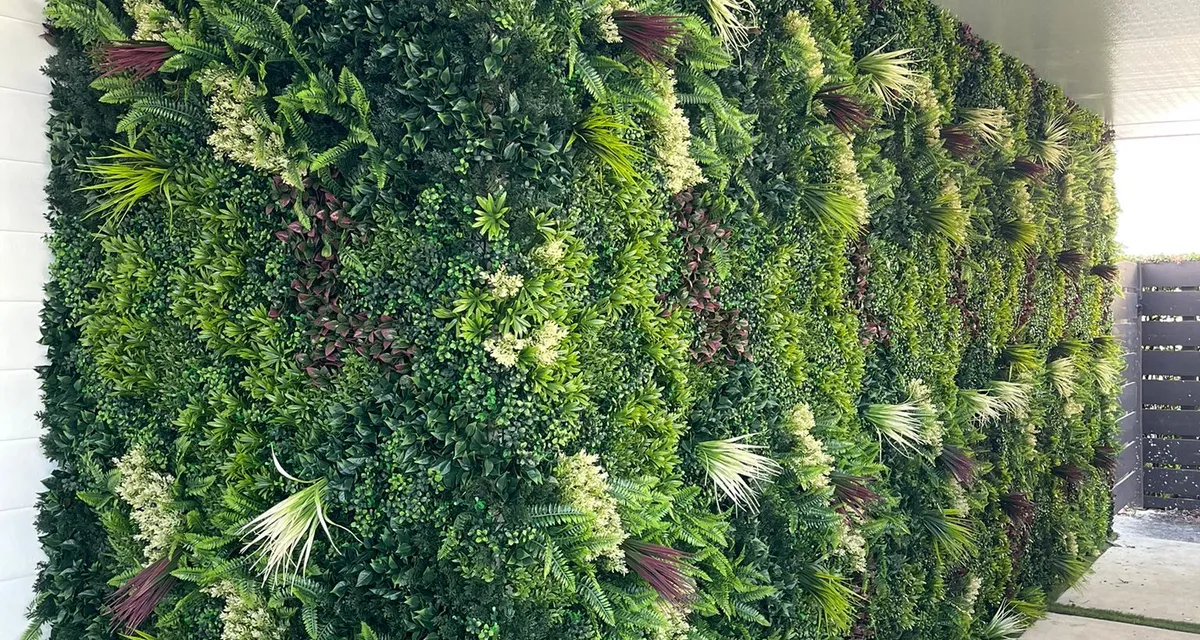
Away from the barn, an equestrian estate carries the same expectations as any other property in Wellington’s Grand Prix Village or Palm Beach Polo & Country Club - a street-facing lawn that reads as manicured, whether the owner is home or traveling the show circuit until the next season starts. Synthetic grass keeps that look constant without irrigation scheduling or a lawn crew coordinated from out of state, which matters on properties in 33414 that sit empty for stretches of the year. The same turf that handles a barn aisle handles the front lawn just as well - it’s one product doing two different jobs on the same property.
What it costs to turf a barn’s working footprint
Pricing on an equestrian property follows the same structure as any other job: landscape turf starts at $6.99 per square foot installed, and the total for a barn’s working grounds comes down to how much footprint actually needs covering - a single wash-rack apron is a different job than every aisle and gate approach on the property. Base condition matters more here than on a typical backyard, since drainage and compaction get engineered around the heavier load, so the free on-site consultation is what turns a starting rate into a real number for a specific barn.
Getting a barn or paddock perimeter measured right
The honest way to scope a project like this is a site visit - walking the actual aisles, gates, and gathering areas rather than estimating square footage from a property line. The instant quote tool gives a starting number, and residential artificial grass covers everything from old ground removal through a finished install, with paver and turf strip work available for walkways that mix hardscape and turf. Every Govorex project comes from a crew with 15+ years of experience, licensed and insured, typically finished within 48 hours, serving equestrian and residential properties alike across Broward and Palm Beach County, with financing available at 50% down and 12 no-interest monthly payments, subject to approval.
Want your yard's real number? Outline it on a satellite map and see starting prices and a 12-month payment plan in about a minute — no sign-up.
Try the Instant Quote Calculator →