Artificial Grass for Side Yards in South Florida
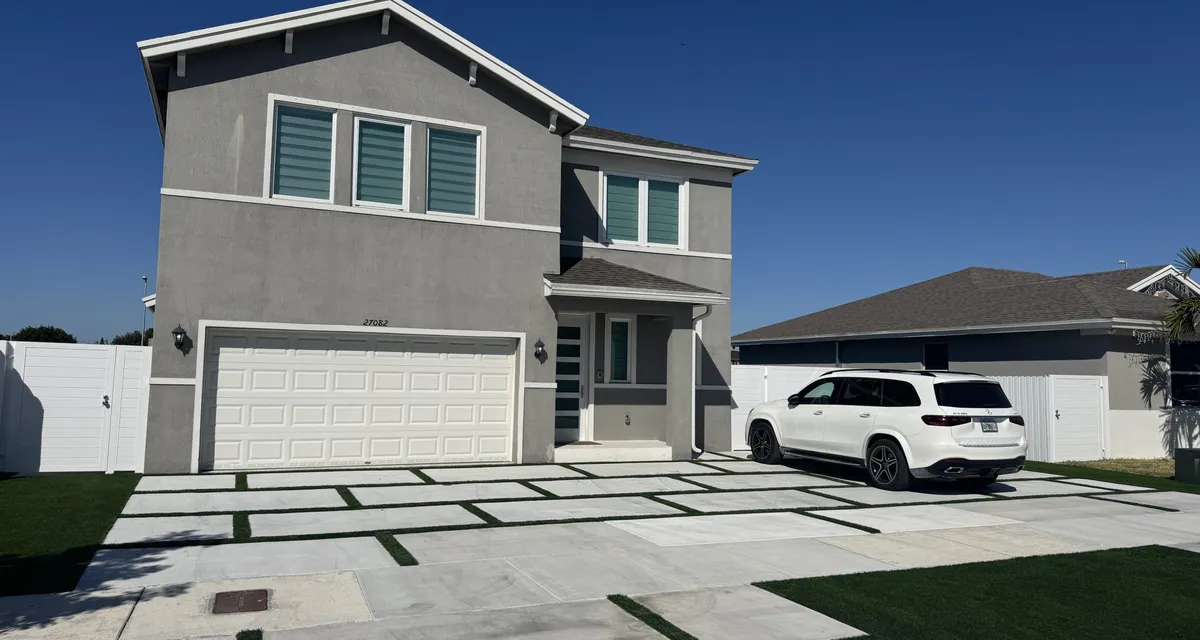
Every South Florida house has one: the strip between the house and the fence line that’s too narrow to landscape and too visible to ignore. It’s where the AC condenser hums, where trash and recycling bins wait for pickup day, where a hose reel lives, and where whatever used to grow there is now either bare dirt, patchy grass, or a bed of gravel that weeds keep finding a way through anyway. Homeowners across Broward and Palm Beach County usually fix every other part of the yard first and leave the side yard for last - which is backwards, because it’s often the cheapest space on the property to convert to artificial grass and one of the ones that benefits the most.
The strip nobody designs for
A side yard rarely gets the attention a backyard or front lawn does, because it’s narrow, awkward to mow, and half-blocked by utility equipment. That neglect shows: thin, sun-starved grass along a fence line that a mower can barely reach, or a gravel bed that started clean and is now sprouting weeds between the stones. Converting that strip to synthetic turf solves the maintenance problem directly - there’s no mower to squeeze through a three-foot gap, no edge to trim by hand against the fence, and no live grass fighting for light between two houses.
Why gravel and mulch lose this particular battle
Gravel and mulch get chosen for side yards because they seem low-maintenance, but a narrow, shaded, high-traffic strip is exactly where both fail fastest. Gravel migrates - kicked loose by foot traffic to and from the gate, tracked onto the patio, gradually mixed with dirt until weeds have something to root in. Mulch breaks down in Florida’s humidity and needs replacing every year or two just to look presentable. Artificial turf doesn’t migrate, doesn’t decompose, and doesn’t give weeds anywhere to start, which is why it’s become the default upgrade once homeowners in Coral Springs and Delray Beach get tired of re-spreading gravel every summer.
Working around what’s already back there
A side yard almost always has something running through it - an AC line set, a condensate drain, an irrigation valve box, a gas meter, or a downspout emptying off the roof. None of that has to move for a turf conversion. Govorex builds the base around existing utilities and grades it so water routed through the space, whether from a condenser or a storm drain, keeps moving toward the yard’s natural drainage path instead of collecting under the turf - the same drainage-first approach covered in our guide to handling standing water during rainy season. Access panels and shutoff valves stay reachable; the turf is simply cut and fitted around them.
What it actually costs
Because side yards are narrow, most conversions are small projects - often the smallest a homeowner will do on the property - priced at Govorex’s standard starting rate of $6.99 per square foot installed for landscape-grade turf. A typical strip runs a fraction of the square footage of a backyard lawn, so the total project cost is usually modest even though the visual difference is significant. Financing is available on any project size: half the total due when the crew starts, the rest split into twelve equal monthly payments with no interest added, subject to approval.
Does it need HOA sign-off if no one sees it?
Often, yes. A side yard tucked behind a fence gate doesn’t get the street-facing scrutiny a front lawn does, but most architectural review boards across the corridor still require a permit application for any exterior lawn change, regardless of visibility. Govorex prepares the same sample and site plan whether the project is a highly visible front yard in Palm Beach Gardens or a side strip a neighbor will never see, so there’s no separate, informal process to navigate - the paperwork is handled the same way either time.
Getting a narrow space measured properly
A side yard’s exact dimensions, what’s routed through it, and how much of it is currently gravel, dirt, or dying grass all vary house to house, which is why it’s worth a look from Govorex rather than a rough guess. The instant quote tool gives a starting number for the square footage involved, and residential artificial grass installs include the full scope - clearing whatever is there now, building the base around existing utilities, and fitting the turf tight against the fence and house. Every project comes from a crew with 15+ years of experience, licensed and insured, typically finished within 48 hours, serving homeowners across Broward and Palm Beach County.
Want your yard's real number? Outline it on a satellite map and see starting prices and a 12-month payment plan in about a minute — no sign-up.
Try the Instant Quote Calculator →